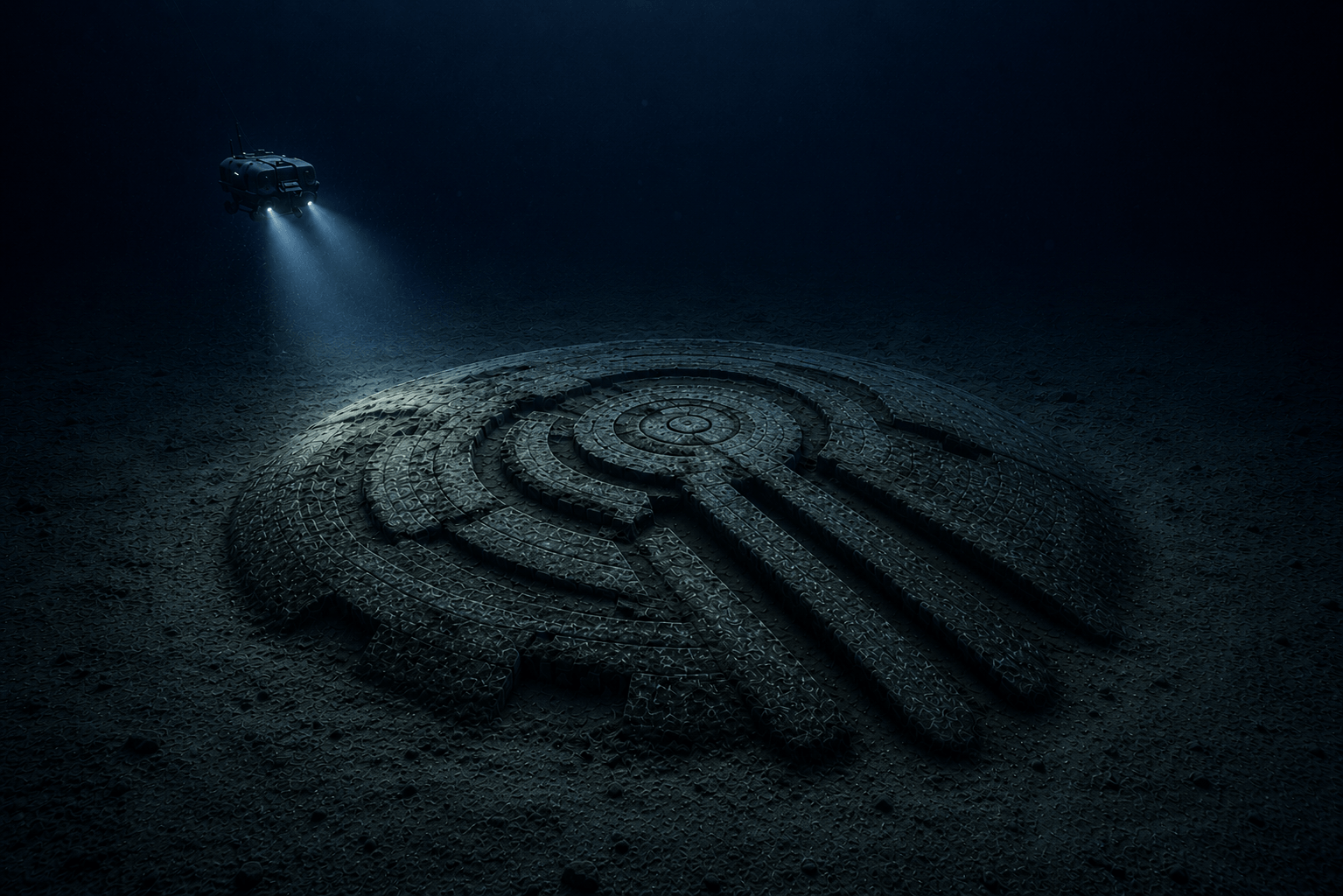
Returning to the site proved difficult.
The Baltic Sea offers poor visibility, uneven terrain and challenging diving conditions.
Divers documented rocky surfaces, fractures and formations around the object.
Additional sonar surveys provided more detail.
Yet they did not produce a universally accepted conclusion.
Researchers and commentators have proposed several possibilities:
- An unusual geological formation shaped over thousands of years.
- A natural rock outcrop altered by glacial activity.
- A man-made object or debris from more recent history.
- A combination of natural features that appeared extraordinary in sonar images.
Each expedition answered some questions.
Then created new ones.
That is why the Baltic Sea anomaly continues to divide opinion.
Why the Baltic Sea Anomaly Still Defies Explanation
Perhaps the greatest mystery is not the object itself.
It is why it continues capturing the world’s imagination.
The available evidence has not confirmed extraordinary claims about the anomaly.
At the same time, the discovery remains an intriguing underwater feature that has inspired years of investigation and debate.
Dennis Åsberg’s continued discussions have kept public interest alive.
Not by proving one theory.
But by reminding us that exploration often begins with unanswered questions.
Sometimes the most enduring mysteries are not the ones we solve.
They are the ones that continue inviting us to look a little closer.
 Watch the Video